
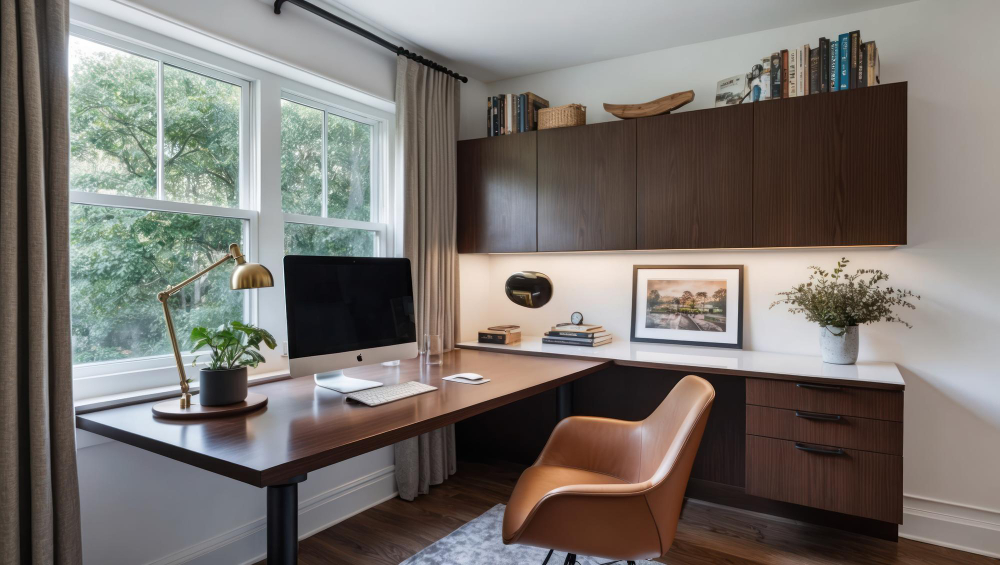
Working from home has become a permanent part of life for many professionals, entrepreneurs, and students. While any spare room can hold a desk and chair, a truly productive workspace requires thoughtful planning. Investing in a custom home office allows you to create an environment tailored to your workflow, helping you stay organized, focused, and comfortable throughout the day.
To better understand what separates an average workspace from an exceptional one, we spoke with remodeling and interior design expert Riley Bennett, who has helped homeowners transform underused rooms into highly functional offices.
“A productive workspace isn’t defined by its size—it’s defined by how well it supports the person using it.”
Q&A with the Expert
Q: Why are more homeowners investing in dedicated home offices?
A: The biggest reason is flexibility. Homes are expected to serve many purposes today, including work, study, virtual meetings, and creative projects. A dedicated office helps separate professional responsibilities from personal life, making it easier to stay productive while maintaining a healthier work-life balance.
Q: What is the first step when designing a custom office?
A: Start by evaluating how you actually work. Do you spend most of your time on video calls? Do you need multiple monitors? Are paper files still important, or is most of your work digital? Understanding these habits allows every design decision to support your daily routine.
Q: Which design features make the biggest difference?
A: Built-in storage is one of the most valuable upgrades. Shelving, cabinets, and drawers reduce clutter while keeping frequently used items within easy reach. Adjustable lighting, ergonomic furniture, cable management, and sufficient electrical outlets are equally important.
Design storage around your workflow. Keep everyday tools nearby while storing archive materials in higher or closed cabinets to maintain a clean, distraction-free workspace.
Q: How important is lighting?
A: Lighting has a significant impact on productivity and comfort. Natural daylight should be maximized whenever possible, while layered artificial lighting prevents eye strain during evening hours. A combination of ambient lighting, task lighting, and adjustable desk lamps creates a more comfortable working environment.
Q: What role does ergonomics play?
A: Ergonomics should never be overlooked. Adjustable seating, proper desk height, monitor positioning, and keyboard placement reduce fatigue and support long-term health. Small improvements in posture can make a noticeable difference over months and years of daily work.
“The most successful home offices quietly remove distractions so you can focus on meaningful work.”
Q: What storage solutions do homeowners often overlook?
A: Vertical storage is frequently underused. Tall cabinetry, floating shelves, and integrated wall systems maximize usable space without making the room feel crowded. Hidden charging stations and dedicated printer cabinets also help maintain a cleaner appearance.
Q: Can technology improve office design?
A: Absolutely. Integrated cable management, smart lighting, programmable climate controls, and high-speed connectivity all contribute to a more efficient workspace. The key is making technology blend into the design rather than dominate it.
Q: Should homeowners design only for today’s needs?
A: No. A well-designed office should remain adaptable. Your career, equipment, and work habits may evolve over time, so flexible shelving, modular storage, and expandable work surfaces are excellent long-term investments.
Plan for additional electrical outlets, internet connections, and storage capacity during the initial remodeling phase. These upgrades are much easier and less expensive before construction is complete.
A thoughtfully designed custom home office is far more than a spare room with a desk. It supports productivity, improves organization, reduces distractions, and creates a comfortable environment for years of everyday use.
Professional custom home workspace planning also helps homeowners maximize available square footage through built-in cabinetry, intelligent layouts, and flexible storage solutions that adapt to changing needs.
Whether you’re working remotely full-time, running a business from home, or simply need a quiet place to focus, investing in a personalized office can improve both your efficiency and your quality of life. By combining thoughtful planning, ergonomic design, durable materials, and future-ready features, your workspace becomes an asset that supports success every day.
Custom home office projects continue to grow in popularity because they deliver practical value that homeowners experience every single day—not just when they first complete the renovation.