
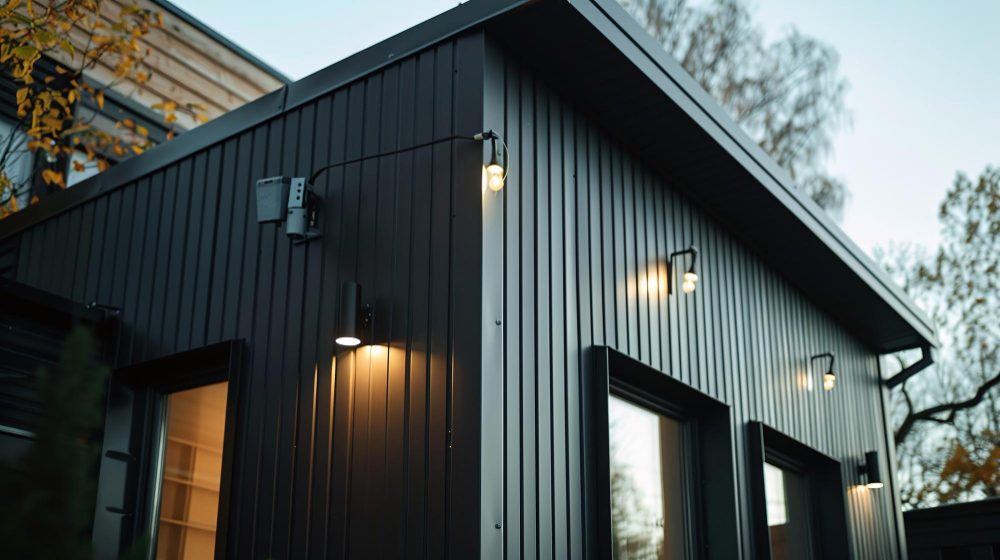
Every remarkable home begins with a decision. Sometimes it is a carefully chosen floor plan, sometimes a handcrafted front door, and sometimes it is something far simpler—a color that quietly reshapes the way an entire structure is experienced.
A Black Siding House is one of those decisions.
For some, it feels daring. For others, it feels surprisingly timeless. Yet behind every striking black exterior lies a deeper architectural philosophy that has little to do with trends and everything to do with proportion, craftsmanship, and confidence.
Dark exteriors possess a remarkable ability to simplify complexity. Decorative trim becomes more intentional. Window frames appear sharper. Natural materials such as stone, wood, and steel reveal richer textures when placed against a darker backdrop. Instead of competing for attention, every architectural element begins working together with greater clarity.
Perhaps that is why black siding continues to fascinate designers. It doesn’t disguise architecture—it reveals it.
“The most unforgettable homes rarely demand attention. They earn it through quiet confidence.”
Modern architecture has embraced this philosophy wholeheartedly. Across mountain landscapes, coastal retreats, suburban neighborhoods, and rural settings, black exteriors have become symbols of thoughtful restraint rather than extravagance. Their presence feels calm, deliberate, and enduring.
Yet the growing popularity of black siding is not merely about aesthetics. It reflects a broader appreciation for homes designed with purpose—homes where every material, proportion, and detail contributes to a unified architectural story.
Chapter One: When Architecture Learns to Embrace Contrast
There was a time when darker exterior colors were reserved primarily for accents. Front doors, shutters, and window trim introduced contrast while lighter siding remained the dominant choice. Over time, however, architects began asking a different question.
What if the contrast itself became the architecture?
That single shift transformed exterior design.
Influenced by Scandinavian simplicity, contemporary minimalism, and the renewed popularity of modern farmhouse architecture, black siding emerged as more than a bold color choice. It became a tool for shaping perception. Large homes appeared more grounded. Simple forms gained visual depth. Ordinary rooflines suddenly carried greater definition beneath changing daylight.
One of the most fascinating qualities of a black exterior is its relationship with light. Early in the morning, subtle shadows soften its appearance. By midday, crisp edges emphasize every carefully designed proportion. During sunset, warm reflections introduce unexpected richness across surfaces that initially seemed monochromatic.
The color itself remains constant, yet the house never appears exactly the same twice.
Material selection further shapes this experience.
Fiber cement siding introduces crisp, contemporary lines that pair beautifully with expansive windows and minimalist architecture. Engineered wood adds warmth through authentic grain textures, allowing natural character to emerge beneath deep, sophisticated finishes. Composite siding combines refined appearance with exceptional durability, making it particularly attractive for homeowners seeking low-maintenance elegance.
Even vinyl siding, once associated primarily with lighter palettes, has evolved considerably. Advances in manufacturing now produce darker finishes with improved color stability and convincing wood-grain textures that complement a wide variety of architectural styles.
Each material tells the same story differently.
Some emphasize precision. Others celebrate texture. All rely on contrast to highlight craftsmanship that might otherwise remain unnoticed.
Windows become brighter against dark façades. Stone foundations feel more substantial. Natural cedar accents introduce warmth that seems almost illuminated by comparison. Landscaping itself changes character as vibrant greenery, flowering shrubs, and ornamental grasses appear increasingly vivid beside deep architectural tones.
Contrast does something remarkable: it encourages every surrounding element to become more fully itself.
Perhaps this explains why black siding continues to transcend individual design movements. It adapts comfortably to modern geometry, traditional craftsmanship, rustic cabins, coastal retreats, and contemporary farmhouses alike. Rather than imposing a style, it allows architecture to speak more clearly.
And that may be its greatest strength.
Chapter Two: Living with a Black Siding House
There is a moment after every successful renovation when the excitement of construction gives way to something quieter. The tools disappear, the landscaping settles into place, and the home simply begins living alongside its owners. It is during this chapter—not on installation day—that a Black Siding House reveals its true character.
Many homeowners initially worry that a dark exterior will feel demanding. Will it overwhelm the property? Will it fade quickly? Will it require constant attention? Surprisingly, the opposite is often true when quality materials and thoughtful design work together.
A beautifully designed exterior is never supported by color alone. It succeeds because every surrounding detail has been chosen with equal intention.
Landscaping, for example, becomes an active participant in the architecture. Vibrant greenery appears richer against deep siding, ornamental grasses introduce movement, and flowering plants seem almost illuminated by contrast. Mature trees frame the structure naturally, softening strong architectural lines without diminishing their presence.
Windows also assume a more prominent role. White frames provide crisp definition, black frames create seamless contemporary compositions, and bronze or charcoal finishes introduce subtle sophistication. The relationship between glass and siding becomes more noticeable because the darker façade naturally highlights reflections of changing skies and surrounding landscapes.
Roofing, trim, exterior lighting, and entry doors contribute just as much to the overall composition. Warm cedar soffits add natural warmth. Stone veneer anchors the home visually. Carefully positioned landscape lighting transforms the exterior after sunset, emphasizing texture rather than simply illuminating walls.
“A beautiful exterior isn’t created by color alone—it emerges from harmony between every architectural detail.”
Practical considerations remain equally important. High-quality fiber cement, engineered wood, composite siding, and advanced vinyl products are specifically designed to withstand years of exposure while maintaining their appearance. Proper installation, adequate ventilation, moisture management, and manufacturer-recommended maintenance all contribute far more to long-term performance than color alone.
The lesson becomes surprisingly simple: confidence in design grows from confidence in construction.
Rather than demanding constant attention, a thoughtfully designed black exterior often becomes easier to appreciate over time. Seasonal changes continually reshape its appearance. Fresh snowfall creates dramatic contrast. Autumn foliage introduces warmth. Spring greenery brings renewed vibrancy. Summer sunlight highlights subtle textures hidden throughout the façade.
The home evolves with its surroundings while remaining unmistakably itself.
Chapter Three: Beyond Color, Toward Character
Perhaps the greatest misconception about a Black Siding House is that its defining feature is color. In reality, color is only the beginning.
Architecture has always been an expression of values as much as aesthetics. Every carefully chosen material, every proportion, and every architectural detail communicates something about permanence, craftsmanship, and the way a home is meant to be experienced.
Black siding simply asks architecture to speak more honestly.
Without excessive ornamentation, proportions become more meaningful. Materials reveal their natural texture more clearly. Window placement, rooflines, entrances, and outdoor living spaces work together with greater visual discipline. The result feels composed rather than decorative.
This quiet confidence is precisely why black exteriors continue appealing to homeowners across remarkably different architectural styles. Modern residences embrace their clean geometry. Farmhouses gain striking simplicity. Mountain homes settle naturally into wooded landscapes. Coastal properties discover elegant contrast against open skies.
Far from being a passing trend, black siding has become a timeless design language because it respects architecture instead of competing with it.
Its influence extends beyond daily enjoyment as well. Thoughtfully designed exteriors contribute to curb appeal, reinforce perceptions of quality craftsmanship, and help establish a distinctive identity that often remains memorable to future buyers. More importantly, they provide homeowners with lasting satisfaction that cannot easily be measured in resale figures alone.
The finest homes are remembered not because they followed design trends, but because every decision reflected clarity, restraint, and purpose.
Ultimately, choosing a black exterior is not about making the boldest statement on the street. It is about creating a home whose character feels authentic, enduring, and deeply connected to the people who live within it.
When supported by quality materials, expert craftsmanship, and thoughtful design, a Black Siding House becomes more than an architectural style. It becomes a lasting expression of confidence—one that continues to feel relevant long after trends have quietly disappeared.